

Cart
0
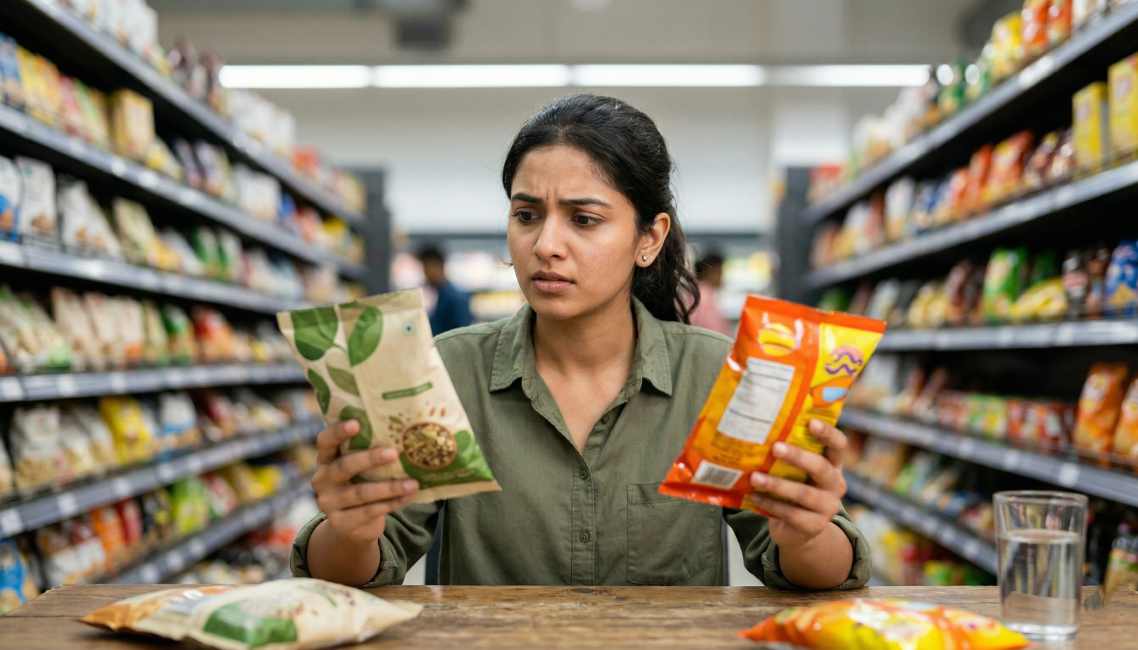
People often grab a snack without thinking. The packet looks nice and the words on it seem healthy. Later, the person may feel heavy or find extra sugar and salt were eaten. That happens a lot. A few quick checks help pick better snacks. This makes it easier to enjoy healthy Indian snacks that feel good after eating. Here are the common mistakes people make while buying snacks.
Not Reading Labels

What the label shows
A label lists what is in one serving. Serving size is what people usually eat, not what should be eaten. The Percent Daily Value or %DV shows if a nutrient is low or high. About 5 percent is low. About 20 percent is high.
Words That Mislead Buyers
Some front words sound healthy but do not tell the whole story:
-
Natural
-
Multigrain
-
Made with whole grains
-
Light or lite
-
No added sugar
These words do not always mean low sugar, low salt, or fewer calories. Some healthy Indian snacks also use these words to look better.
How to read the ingredient list
-
Check the serving size and compare with how much will be eaten.
-
Ingredients are listed from most to least.
-
If sugar or oil is near the top, the snack has a lot of it.
-
Look at %DV for sugar, salt, saturated fat, and fiber.
-
If Added Sugar is high, it is not the best pick.
Ignoring Sugar and Hidden Sweeteners

Why it matters
Too much added sugar harms teeth and adds weight. WHO says free sugars should be less than 10 percent of daily calories. Reducing to about 25 grams per day gives extra benefit.
Different names of sugar on the pack
|
Name on label |
What it means |
|
Sucrose |
Table sugar |
|
Glucose |
Simple sugar |
|
Fructose |
Sugar used in syrups |
|
High fructose corn syrup |
Strong sweetener |
|
Maltose, Dextrose |
Sugars from starch |
|
Honey, Molasses, Syrup |
Still add sugar |
|
Fruit juice concentrate |
Hidden sugar source |
|
Maltodextrin |
Raises blood sugar fast |
When buying healthy Indian snacks for evening snacks, check these names. They hide the true sugar amount.
Choosing Low-Fat but High-Salt Snacks

What to know
WHO recommends adults keep salt under 5 grams a day, about 2 grams of sodium. Many low-fat snacks add salt or refined carbs to taste better.
Health risks
-
High salt can raise blood pressure.
-
Refined carbs can raise blood sugar quickly.
-
Low-fat snacks may not keep a person full, so more will be eaten later.
A product that says low-fat can still be high in salt. Some healthy Indian snacks fall into this trap.
Believing “Baked” Means Healthy

What baked means
Baked only says how the food was cooked. It does not say how much sugar, salt, or oil is inside.
When it is not better
-
Baked snacks can have the same calories as fried ones.
-
They can be low in fiber and low in protein.
-
Eating more than one serving adds calories fast.
Do not assume baked equals healthy. Check the back label to find the best options among healthy Indian snacks.
Hidden Ingredients

What hidden items are
Hidden ingredients are not clear from the front of the pack. They include starches, sweeteners, and flavour enhancers. They add calories and little nutrition.
Common hidden items
|
Hidden item |
Why it matters |
|
Maltodextrin |
Raises blood sugar fast |
|
Polydextrose, Inulin |
May cause gas for some people |
|
Sorbitol, Xylitol |
Can cause bloating |
|
Monosodium glutamate |
Some people are sensitive |
|
Modified starch |
Adds calories with little nutrition |
Even when picking healthy Indian snacks, check the ingredient list for these items.
Ignoring Protein and Fiber

How much is needed
Fiber needs are about 25 grams per day for women and 30 to 38 grams per day for men. A simple target is at least 25 to 30 grams. For protein, the usual guide is 0.8 grams per kilogram of body weight each day.
Protein benefits
-
Keeps a person full longer.
-
Helps the body repair and stay strong.
-
Reduces the chance of overeating later.
A good snack can give 7 to 15 grams of protein and 3 to 5 grams of fiber. That makes evening snacks more filling and closer to the best picks among healthy Indian snacks.
Ignoring Preservatives and Flavours

What they do
Preservatives and artificial flavours keep snacks fresh and tasty. Eating them often raises the total intake of additives.
Common harmful additives
|
Additive |
Common use |
Why to limit |
|
Sodium benzoate |
Drinks and sauces |
May cause reactions in some people |
|
BHA and BHT |
Stop oil from spoiling |
Linked to concerns at high amounts |
|
Artificial colours |
Snacks and sweets |
Can affect sensitive people |
|
Sulfites |
Dried and packed foods |
Can trigger asthma in some people |
Choose simple items with fewer additives when possible. That helps eat cleaner healthy Indian snacks.
Conclusion
Snacking does not need to stop. A few checks make a big difference. Read labels, look for hidden sugar and salt, and pick snacks with fiber and protein. Do not trust front words like baked or natural without checking the back. With small care, the best evening snacks can be chosen and healthy Indian snacks can be enjoyed more often.
Looking for better snack choices? Explore Quipps and buy healthy snacks online from our online shop. Simple ingredients, smart picks, and tasty options for your healthy evening snacks.

